
Your data on MRCVSonline
The nature of the services provided by Vision Media means that we might obtain certain information about you.
Please read our Data Protection and Privacy Policy for details.

In addition, (with your consent) some parts of our website may store a 'cookie' in your browser for the purposes of
functionality or performance monitoring.
Click here to manage your settings.
If you would like to forward this story on to a friend, simply fill in the form below and click send.

Your friend's email:
Your email:
Your name:
 
 
Send Cancel

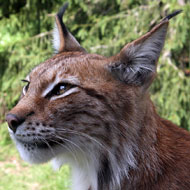
Wild lynx may be reintroduced in the UK
wild lynx
The Eurasian lynx has been extinct in Britain for more than 1,300 years.

Consultation launched to gauge views of the public

Wild lynx could be reintroduced to parts of the UK, more than 1,300 years after they became extinct. A consultation launched by the Lynx UK Trust is seeking the public's views on the proposal.

The Eurasian lynx is thought to have been hunted to extinction for its fur between 500 and 700 AD in Britain.

As part of the ambitious "rewilding" project, the Lynx UK Trust proposes to release a number of lynx wearing radio tracking devices at three UK sites - in Norfolk, Cumbria and Aberdeenshire.

Initially, an online survey aims to find out whether the public supports or opposes the reintroduction as part of a controlled and scientific trial.

After the consultation is completed, the trust will apply to Natural England and Scottish Natural Heritage for approval.

Dr Peter O'Donoghue from Lynx UK Trust told BBC News: "We're delighted by the overwhelmingly positive response. It will be done in a very controlled, scientific way and we would be sure that everyone's concerns and voices would be taken into account."

The survey can be found here: https://www.surveymonkey.com/r/reintroduction

Image © David Castor/Wikimedia Commons

Become a member or log in to add this story to your CPD history

Defra shares new Sanitary and Phytosanitary guidance

News Story 1
 Defra has published guidance for the vet sector ahead of a proposed UK-EU Sanitary and Phytosanitary agreement.

The agreement, which will change the movement and trade of animals and related products, could see reductions in checks, paperwork and certification. As well as describing regulatory developments, the advice highlights the importance of animal ID, registration and traceability in disease control and other compliance arrangements.

The guidance can be found here. More detail is expected as negotiations progress. 

Click here for more...
News Shorts
New form for online veterinary medicines retailers

The Veterinary Medicines Directorate (VMD) has produced a new online form for retailers wishing to sell veterinary medicines on the internet.

The form replace the previous Word version and is part of the VMD's ongoing commitment to digitise its processes. Anyone retailing prescription medicines online, including POM-V, POM-VPS and NFA-VPS categories, is lawfully required to register with the VMD before trading.

The change only applies to new applicants. Retailers already listed on the VMD's Register of Online Retailers or registered under the Accredited Internet Retailer Scheme (AIRS) do not need to do anything.

