


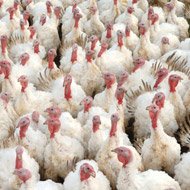
H5N8 strain has now been reported in four European states
Outbreaks of the H5N8 strain of avian influenza in poultry have been reported in Germany and Italy, Defra have announced.
In Italy, the outbreak has affected approximately 32,000 birds at a turkey fattener farm in the province of Rivigo, Venito. Disease control measures have been implemented in the area, including the establishment of three kilometre protection and 10km surveillance zones, in addition to culling, and cleansing and disinfection.
Germany has reported two further outbreaks since an initial outbreak of the strain was found in November in Mecklenurg Vorpommern.
The first was reported in 16 December in the district of Cloppenburg, Lower Saxony, in a poultry holding consisting of around 18,000 birds following reports of increased mortality.
The second was at an indoor duck fattening unit of approximately 10,000 birds in Elmsland region, Lower Saxony. Culling on the infected premises has been completed and tracings have been implemented.
In their disease report, Defra state that they await the sequence analyses for the viruses "with interest" to determine the relationships to those outbreaks in Netherlands, Germany and the UK as well as further afield in the USA, Canada, Republic of Korea, Japan and China, potentially providing insights into origins.
They believe that the likely the source of infection is through indirect contact with infected wild birds, meaning that the likelihood of the UK having another outbreak is increased for the upcoming period.
Whilst Defra monitor the situation, poultry keepers are reminded to maintain high standards of biosecurity and to report any suspect clinical signs promptly.


 Companies marketing medicines for small pets exempt from authorisation must submit their annual return to the Veterinary Medicines Directorate (VMD) by 30 November 2026.



