


Colostrum and whey could have a role in TB control
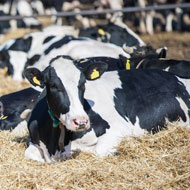
High sensitivity tests may be key to bTB eradication, researchers say.
Colostrum and colostral whey could have an important role to play in the control and eradication of bovine TB in the UK, according to researchers from the University of Adelaide in Australia.
Writing in the Veterinary Record letters, researchers from the university's School of Animals and Veterinary Sciences, said recent research has underlined the need for tests with high diagnostic sensitivity.
A new test for alpacas may even have applications for cattle, they said. The recently launched multiplex TB immunoassay shows superior sensitivity compared to the intradermal test for alpacas.
Recent research on Johne's disease in vaccinated sheep also found that using colostrum or colostral whey showed a significant increase in antibody ELISA sensitivity.
"We are not aware of any current research in the UK on bovine TB or Johne's disease using colostrum or colostral whey to parameterise antibody assays and wish to draw attention to the potential of these samples to increase diagnostic sensitivities," they wrote
"Colostrum is readily available on dairy farms and is easy to collect and store. Current bovine TB and Johne's disease research projects may be able to incorporate the collection of colostrum without major additional expense."
The full letter can be found in Vet Record Vol 175 No 23.


 Companies marketing medicines for small pets exempt from authorisation must submit their annual return to the Veterinary Medicines Directorate (VMD) by 30 November 2026.



