


BBC to use thermal imaging to see what goes on at night
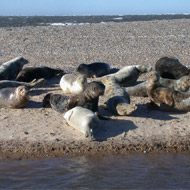
Winterwatch, which returns to BBC Two in January, will use a series of pioneering filming techniques to capture a record-breaking seal colony in North Norfolk.
For the first time, military-grade thermal imaging will be used to film thousands of seals on the Blakeney Point National Trust reserve at night, allowing for "an intimate view" that was previously impossible.
So far this winter, over 1,756 seal pups have been born at the reserve. The total breaks the 2013-14 season total of 1,556, with at least another few months of pupping still to go.
Speaking to BBC News Norfolk Winterwatch's producer, Bill Markham, said: "In peak pupping season there can be up to 45 pups born a night but we don't really know what goes on under the cover of darkness so we're bringing our thermal imaging camera to Blakeney Point to see what's going on.
"The technology allows us to use this thermal imaging camera as a wildlife camera with such high definition we can zoom in and film wildlife with that intimate view we didn't used to get with the old thermal imaging system."
Ajay Tegala, from the National Trust is responsible for counting the seals twice a week. She said: "We have never looked at the rookery at night before, so whatever is captured will be of great interest and contribute to our knowledge and understanding of these fascinating mammals.
Winterwatch returns to BBC Two on Monday, January 19.
Image (C) Tony Scott


 Veterinary practices are being urged to help owners safely dispose of any unused and expired pet medicines - not just antibiotics - during November's Animal Medicines Amnesty.



