


Tackling the threat of vector-borne diseases
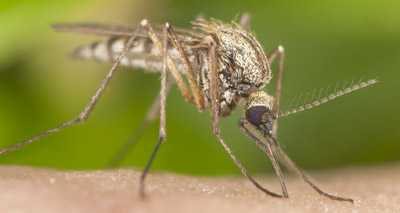
VBDs account for 17 per cent of the world's infectious diseases.
In the wake of recent outbreaks of avian flu and ebola, a new whitepaper has been created to highlight emerging vector-borne diseases that pose the most significant threats to human and animal health.
Commissioned by the International Federation for Animal Health (IFAH), the paper is intended as a framework for the animal health industry, generating debate and guiding actions going forward.
Vector-borne diseases can have a devastating effect on economies and human and animal health. It is believed that a one health approach could significantly improve our understanding of these diseases.
VBDs account for 17 per cent of the world's infectious diseases. Malaria alone is responsible for around 627,000 deaths every year. Livestock diseases can also have a devastating effect on economies; trypanosomiasis, for example, causes losses of up to $1.2 billion a year.
The fight against VBDs is influenced by many factors, including the impact of climate change on vector spread, the rising risk of insecticide resistance and man-made habitat changes, such as the creation of wetlands and increased global movement of goods, humans, livestock and companion animals.
The whitepaper, authored by Oxford Analytica and supported by the Bill and Melinda Gates Foundation, highlights the most urgent new threats, the most significant challenges faced and how best to tackle these issues globally.
Carel du Marchie Sarvaas, IFAH's executive director, said: "Vector-borne diseases are a topic of international significance that need to be debated head on.
"The white paper and roundtable will raise awareness of the importance and need to control these diseases and provide the evidence for solvers (the animal health industry) and donors who fund efforts to develop tools to control neglected vector-borne diseases.
"The white paper includes a number of case studies from across the world and suggests proactive strategies for tackling them on a local, regional and global level".


 Companies marketing medicines for small pets exempt from authorisation must submit their annual return to the Veterinary Medicines Directorate (VMD) by 30 November 2026.



