


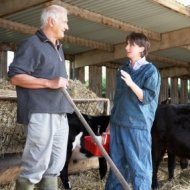
Ministers have been privately considering plans to cut back on animal health and welfare inspections
The BVA has urged Defra to give full and careful consideration to the role of vets in protecting animal and human health and ensuring food safety.
The statement follows a report in the Guardian, published November 26, which revealed that ministers have been privately considering plans to cut back on health inspections to fight avian flu, as well as a range of animal welfare and farm inspections.
Other options under consideration include using "non vets" to test for bovine TB, and placing all responsibility on farmers to do salmonella test sampling. The latter would cut the need for nearly 750 government inspectorate visits lasting one to two hours.
BVA President John Blackwell said:
“BVA understands the pressures on public spending and the need for efficiencies and appropriate lessening of the regulatory burden on business, including the agriculture sector. However, we cannot overstate the importance of any cuts or changes being carefully considered from a fully informed perspective and with an eye to long term-consequences, not simply short-term expediency.
"Cuts cannot come at the expense of animal welfare and health, which if compromised can have serious consequences for human health and food production.
“Defra works closely with vets and is aware of the critical role vets play in disease surveillance - Defra’s own survey highlights that local vets are a trusted source of key information to their clients and this is fundamental to ensuring robust disease control and eradication strategies.
"If these reports are true, our message to Defra is don’t downgrade the role of vets in food safety and animal health and welfare. It is important to stress that any attempt to reduce regulation by government should not increase risk by reducing the pivotal role vets carry out in public health and food safety, alongside animal health and welfare.”
In response to the Guardian's article, Defra say that reducing inspections that protect humans from animal disease is not an option.
A Defra spokesperson said: “These are not policy ideas developed by government. These suggestions come from a report written by external consultants looking at existing legislation that impacts farmers.”


 Companies marketing medicines for small pets exempt from authorisation must submit their annual return to the Veterinary Medicines Directorate (VMD) by 30 November 2026.



