


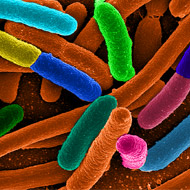
Discovery helps to explain why bacteria are so widespread and why they are so hard to kill
A study by the University of Edinburgh has revealed that some bacteria flourish even when under continued attack. The development could help to explain how our immune systems can't always prevent infections.
An examination of the common E. coli bug has shown that it is able to recover continually from potentially fatal harm to its genetic material, without slowing down the rate at which it grows.
The team who led the study say that the finding helps to explain why bacteria are so widespread and why they are so hard to kill.
The researchers studied how E. coli responded when its DNA strands were deliberately broken as it tried to carry out its everyday function of dividing and reproducing.
They were astonished to find that the bug was able to use a combination of methods to survive repeated DNA damage. It has an in-built emergency response to ensure that DNA damage is quickly repaired. It also carries out overlapping rounds of DNA replication, which enables its cells to continue to divide and reproduce. This ensures E. coli keeps multiplying as it recovers.
A series of experiments revealed that bacteria were able to thrive indefinitely and grow at almost identical rates, even if repeated DNA breaks took place.
Damage to DNA occurs in most organisms, for example from exposure to harmful chemicals or UV radiation. Bacteria which cause disease have to survive attacks from our immune system, which can lead to DNA damage. If not repaired, this can be fatal to bacteria.
Dr Elise Darmon of the University of Edinburgh's School of Biological Sciences, who led the study, said: "E. coli has a robust approach to recover from DNA damage, which ensures an excellent survival rate. This study shows how tough bacteria are and why they are the most populous independent life form on Earth. More work is needed to determine whether their appetite for recovery is linked to bacteria's ability to get the better out of our immune system."
The study was published in the journal PLOS ONE
Image (C) Mattosaurus


 Companies marketing medicines for small pets exempt from authorisation must submit their annual return to the Veterinary Medicines Directorate (VMD) by 30 November 2026.



