


Sharon Redrobe's pioneering treatment of great apes features in new BBC television series
Two British veterinary surgeons are preparing to fly out to an ape sanctuary in Cameroon this week to perform vital medical checks on endangered primates.
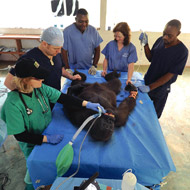
CEO of Twycross Zoo Sharon Redrobe, accompanied by Twycross Zoo's veterinary surgeon Sarah Chapman, is a renowned expert in the care and treatment of wild animals. Her pioneering treatment of Shufai, an orphaned Western lowland gorilla, features in a new BBC documentary series.
Shufai arrived at the sanctuary ten years ago. He was orphaned and severely mutilated following an attack by poachers who killed his mother for bushmeat. As Shufai grew, the bullet wounds and gunshot pellets lodged in his wrist deformed the bones in his arm causing great pain. It also affected his ability to climb and interact with other gorillas in the group.
In 2012, Redrobe conducted a special operation with a team of vets to correct the problem. Following a further operation last year to amputate his arm, he has now successfully re-integrated with his group and is able to move around and climb freely.
On her return to the sanctuary, Redrobe will check-up on Shufai and administer health checks to 30 chimpanzees. The work forms part of an international scientific study to diagnose and treat heart disease in these endangered animals.
Sharon said: "The risks of veterinary surgery in the jungle are very high. In Cameroon, we often have to carry out life-threatening surveys and medical procedures in a adapted school classroom.
"Working in such conditions means the risks to animals and humans are much higher than in the UK and we work very closely together to ensure everyone is kept safe. The temperatures and humidity make the working conditions almost unbearable and we have to make sure the anaesthetised animals, as well as us humans, don’t get dehydrated during procedures.”
Sharon is a vet advisor and trustee for Ape Action Africa. She is renowned internationally for her ground-breaking operations on captive gorillas, ranging from eye cataract operation techniques to fertility treatment.
Operation Wild is presented by Clare Balding and Steve Leonard on BBC One.
Image courtesy of Lucy Ray


 Companies marketing medicines for small pets exempt from authorisation must submit their annual return to the Veterinary Medicines Directorate (VMD) by 30 November 2026.



