


Plans to tackle campylobacter stepped up
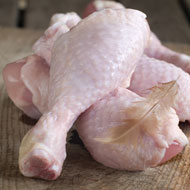
Campylobacter is the biggest cause of food poisoning in the UK.
A working group comprising government and food industry stakeholders has stepped up its efforts to tackle campylobacter in raw poultry meat.
At its most recent meeting, the group - which includes the National Farmer's Union (NFU), Food Standards Agency (FSA) and Defra - discussed practical methods of controlling the bacteria on farm.
NFU president Meurig Raymond said industry collaboration is essential to finding a solution to campylobacter.
"Campylobacter is not a new issue for the poultry industry," he said. "It is a very complex organism which is able to adapt to different environments.
"It's incredibly positive to see how much research the industry has undertaken and has in the pipeline for the near future."
Those in attendance heard updates on research projects that are currently being carried out to establish the most effective measures, for example through improved packaging and improving consumer awareness of correct handling and storage of raw poultry meat.
Bob Martin, head of food-borne disease strategy at FSA, said: "Campylobacter is the biggest cause of food poisoning in the UK so it is vital we work together to tackle this problem.
"We must look at every stage of the food chain to identify solutions that will make a real impact and we welcome the work the NFU and other partners are doing to help us achieve this."
Mr Martin added that as well reducing the level of contamination in raw products, improving consumer awareness of safe food handling is essential.
A conference will be held at NFU headquarters on March 28 to bring together stakeholders in sharing best practice and areas for development.


 Companies marketing medicines for small pets exempt from authorisation must submit their annual return to the Veterinary Medicines Directorate (VMD) by 30 November 2026.



