


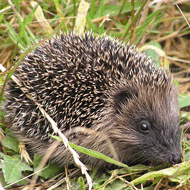
The largest public-led investigation into the health of British wildlife has begun today (January 16) to find out if disease is contributing to population declines.
Conservation charities have collaborated to launch the Garden Wildlife Health project, which will rely on data provided by British garden owners.
The first collaborative citizen science project of its kind, Garden Wildlife Health has grown out of a partnership between the Zoological Society of London (ZSL), the British Trust for Ornithology (BTO), Froglife and the RSPB.
Members of the public are being asked to report signs of disease online to help monitor the wellbeing of species commonly found in Britain - including everything from garden birds and hedgehogs to reptiles and amphibians.
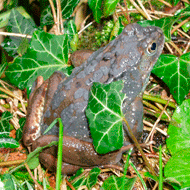
Data collected by the public will be used by the research team to discover where and when wildlife diseases occur and the impact these are having on populations in order to protect against declines in the future.
Kathy Wormald of Froglife explained: “We are already aware that many British wild animal populations have declined due to habitat loss. More recently it has become apparent that infectious disease in amphibians has caused significant population declines. This new project will provide us with invaluable information to help these species.”
Tim Hopkins, Garden Wildlife Health project-co-ordinator at ZSL, urged the British public to report wildlife disease in their gardens to gardenwildlifehealth.org.
"We all share our gardens with wildlife but often fail to notice how these animals are faring," he said. "We’re already seeing a steep decline in a number of iconic British animals, including the hedgehog, and we need to know whether disease is playing a role.
"We know that common frog and greenfinch populations have declined as a result of disease and keeping an eye on our British garden species is crucial if we are to understand the threats to their health, which not only affect individual animals, but can impact entire populations."
Hedgehog image courtesy of Tony Wills, common frog image courtesy of Sarah Reed.


 Companies marketing medicines for small pets exempt from authorisation must submit their annual return to the Veterinary Medicines Directorate (VMD) by 30 November 2026.



