


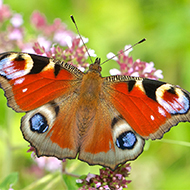
Thousands of people vote in landmark poll
A ‘showstopping garden icon’ has been dubbed Britain’s Favourite Butterfly in a landmark poll.
The Peacock butterfly scooped the top spot in Butterfly Conservation’s first-ever poll to find the nation’s champion, beating off competition from 59 other butterflies.
Over 20,000 members of the public cast their vote in the poll, which also saw the Orange-tip come a close second, the Red Admiral third, Holly Blue in fourth, and the bright yellow Brimstone coming in fifth.
Kate Merry, Butterfly Conservation’s head of engagement, said: “The response to Britain's Favourite Butterfly has been absolutely wonderful, and we're not surprised. It's clear that people up and down the country love butterflies of all shapes, sizes and colours, and voted in their thousands for their favourites.
“The Peacock is a worthy winner, it’s a true showstopper and a species that I bet a lot of us picture when we think of butterflies. It’s been really special seeing people get so passionate about their favourites and throw their support behind them! Now we can’t wait to see how many Peacocks are spotted up and down the country in this summer’s Big Butterfly Count.”
News of the win comes at an important time for British butterflies. In 2024, Butterfly Conservation delared an emergency after numbers recoded during its Big Butterfly Count fell to their lowest ever. The charty is calling on everyone to get involved with the 2026 count (17 July-19 August) to get a clearer idea of how Britian's most common species are faring.
Kate added: “Taking part in the Big Butterfly Count couldn’t be easier, simply spend 15 minutes in any outdoor space and count the butterflies and day-flying moths you see and submit your sightings to help build our interactive map.
“This information will help conservationists to see how some of our more-common species are faring, which in turn helps to build a wider picture of how all butterflies and moths are doing. It’s easy, fun for all the family, and a great excuse to get outside and experience the simple joy of spotting butterflies.”
Image (C) John Murray.


 BVA has announced a new series of its Building Great Workplaces lunchtime webinars.



