


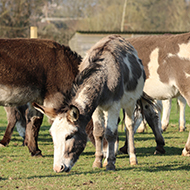
Research finds many ‘beach donkeys’ are suffering from lameness, back pain and welfare issues.
With temperatures set to soar this Bank Holiday weekend, a leading animal charity is urging visitors to farm parks or seaside resorts to consider the welfare of working donkeys.
The call follows research by The Donkey Sanctuary, which found commercial licensing is failing to protect the welfare of these animals across the UK.
The study assessed the welfare of 179 working donkeys relinquished into the charity’s care from licensed commercial operators, as well as animals from premises visited by donkey welfare advisors.
It found that almost all of the donkeys were suffering from poor health, including lameness, back pain, low weight, and inadequate dental or hoof care. Notably, nearly three-quarters of these animals had been working as beach donkeys.
Published in Veterinary Record, the research also highlights a significant change in the roles these animals perform. While traditionally associated with seaside rides, donkeys are increasingly featured in films and other media, and as attractions in farm parks or petting zoos.
The Donkey Sanctuary warns that these evolving roles bring new and often overlooked welfare challenges, raising concerns about how effectively current regulatory systems safeguard the donkeys.
Study lead Dr Tamlin Watson, a senior researcher at The Donkey Sanctuary, emphasised that the challenges facing the system are not necessarily due to negligence, but rather to limited resources and expertise.
“Licensing authorities are expected to oversee an incredibly diverse range of premises from gambling venues to theme parks and zoos, often without the specialist knowledge or resources required to properly assess animal welfare in a diverse number of species,” she said.
To address this gap, the Donkey Sanctuary recently hosted a continuing professional development (CPD) online event for farm parks at which 79 per cent of attendees were local authority officers. Following the success of this event, further training sessions are being planned for 2027.
Image (C) The Donkey Sanctuary (SML)


 Two independent vets have launched a podcast to help owners strengthen their bond with pets. Dr Maggie Roberts and Dr Vanessa Howie, who have worked in both veterinary practice and major charities, are keen to use their experience to enable people to give pets a better life.



