


The study could lead to earlier diagnosis in humans and animals.
A new study has identified biomarkers for early canine osteoarthritis, paving the way for earlier detection in both dogs and humans.
Using high-resolution micro-computed tomography (CT), researchers at the Royal Veterinary College (RVC) mapped the femoral head of dogs treated with total hip replacement surgery for osteoarthritis.
Their findings show that in the earliest stages of osteoarthritis, the inner regions predictably change their bone structure pattern, allowing for early identification of the disease.
As the disease progresses, the dense layer of bone below the joint surface becomes more porous in proportion to the increasing severity of osteoarthritis, distinguishing mild from severe changes.
This is the first time this advanced form of evaluation has been performed in dogs or humans. It has also been published in the leading human journal, Osteoarthritis and Cartilage, underscoring the value of a One Health approach to disease research.
Professor Richard Meeson, Professor of Orthopaedics at the RVC, and senior author of the paper, said: “Osteoarthritis is a devastating disease affecting both people and pets. Every day in our orthopaedic referral clinic, I see dogs suffering from its severe effects.
“What is truly exciting is that through our clinical work, we can transform the lives of dogs through hip replacement surgery, and we have also been able to drive forward pioneering research at the RVC. This research has provided new insights into the disease and, crucially, brings us closer to diagnosing osteoarthritis at a much earlier stage.”
The team now hope to match the changes with clinical scans to develop improved non-invasive approaches to assessing joint health at much earlier stages of disease.
Dr Gareth Jones, former PhD Student at the RVC and lead author of the paper, said: “Uniquely, our pet dogs share our environment and lifestyles and often develop the same diseases.
“It is therefore pleasing to see greater acceptance of the opportunity to learn from veterinary diseases to also understand human diseases, through our One Health approach, with this work on dogs being published in such an esteemed human research journal.”
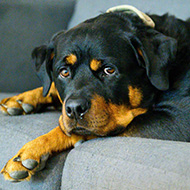
Image (C) Wirestock Creators/Shutterstock.


 Two independent vets have launched a podcast to help owners strengthen their bond with pets. Dr Maggie Roberts and Dr Vanessa Howie, who have worked in both veterinary practice and major charities, are keen to use their experience to enable people to give pets a better life.



