Your data on MRCVSonline
The nature of the services provided by Vision Media means that we might obtain certain information about you.
Please read our Data Protection and Privacy Policy for details.

In addition, (with your consent) some parts of our website may store a 'cookie' in your browser for the purposes of
functionality or performance monitoring.
Click here to manage your settings.
If you would like to forward this story on to a friend, simply fill in the form below and click send.

Your friend's email:
Your email:
Your name:
 
 
Send Cancel

New guidance for treating horses of unknown ownership
The guidance offers six recommendations for treating such cases.
The resource has been launched to address ‘intimidating’ process.

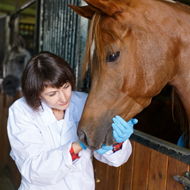
The British Equine Veterinary Association (BEVA) has published a new resource for veterinary surgeons providing treatment to equids where the owner or keeper cannot be identified.  

The mobile-friendly library is designed to make the rules for providing veterinary care to such equids clearer, in line with the RCVS Code of Professional Conduct.

The Code of Professional Conduct describes how its members should not unreasonably refuse a patient first aid or pain relief, which might include euthanasia. It states that attending veterinary surgeons should understand the appropriate procedures when handling such cases.

This new set of guidance has been compiled by BEVA, in collaboration with groups including the RSPCA, World Horse Welfare, the National Equine Crime Group, as well as national and local authorities.

Included in the library is a decision tree for checking correct procedures, an overview of stakeholder roles and responsibilities, a ‘what if’ troubleshooting guide, and a registry of essential contacts. There is also a selection of examination and treatment worksheets, such as euthanasia certification, to support the completion of paperwork.

The guidance notes offer six recommendations when treating these cases, including attending the scene, recording notes and seeking a second opinion. There is also guidance for gaining euthanasia authorisation and carcass collection.

Imogen Burrows, BEVA president, said: “It can be an intimidating process when visiting an equid without an owner, but our new resources aim to address the potential stress factor and make the rules around the provision of care very clear-cut.

“We have produced all the documents the attending vet should need, no matter their location or circumstances. Most importantly, if they are attending alone, they will know how to access the right help at the right time, secure in the knowledge that they are following appropriate, validated procedures.”

The resources can be accessed here.

Image © Shutterstock.com/134pixels

Become a member or log in to add this story to your CPD history

FIVP announces third series of Practice Matters

News Story 1
 The Federation of Independent Veterinary Practices (FIVP) has announced a third season of its podcast, Practice Matters.

Hosted by Ian Wolstenholme, series three will focus on the Competition and Markets Authority (CMA) investigation, including a discussion about some of the expected impacts on independent veterinary colleagues.

Episode one launches on 13th January with guests Drs David Reader and Scott Summers, who will draw on their research into the CMA investigation and provide insights into themes such as transparency, pricing and consumer trust.

Ian Wolstenholme said: "In its third series, we will try and hone in on what the changes will mean in reality for independent practices with advice and guidance on implementation and delivery, drawing on the experience of our own team and other experts in the profession. Hope you can join us soon!" 

Click here for more...
News Shorts
Survey seeks ruminant sector views on antimicrobial stewardship

A new survey is seeking views of people working in the UK ruminant sector on how to tackle the challenge of demonstrating responsible antibiotic stewardship.

Forming part of a wider, collaborative initiative, the results will help identify the types of data available so that challenges with data collection can be better understood and addressed.

Anyone working in the UK farming sector, including vets and farmers,is encouraged to complete the survey, which is available at app.onlinesurveys.jisc.ac.uk