


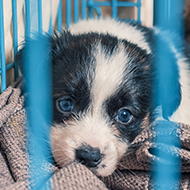
New bill will clamp down on puppy smuggling.
Vets have welcomed a major new law that will introduce crucial measures to clamp down on puppy smuggling.
The new Animal Welfare Bill received Royal Assent on 2 December, and will increase the minimum age that puppies can enter the UK to protect the public from diseases like rabies and Brucella canis.
It will ban the import of dogs and cats with illegal mutations, such as those that have been declawed or have cropped ears.
Under the new Bill, pet traders will be restricted to just five animals per vehicle and pets travelling separately from their owner must do so within five days of their owner’s travel.
The Bill will also protect vulnerable animals from suffering lengthy journeys in poor conditions by banning the import of cats and dogs under six months old and those that are heavily pregnant.
BVA President Dr. Rob Williams MRCVS said: “Every day, vets in practice see the devastating consequences of puppy smuggling and the loopholes that allow illegal and brutal mutilations like ear cropping and tail docking to continue.
“After years of tireless campaigning by the British Veterinary Association, the wide-ranging measures in this new legislation will finally stop criminal gangs from abusing pet travel rules for profit as well as tackle rising cases of imported diseases, such as Brucella canis, which are not currently endemic to the UK and which can be passed from pets to people.”
Vet Danny Chambers, who introduced the legislation via a Private Members’ Bill, said: “As a vet, I've treated many dogs with cruelly cropped ears or docked tails, leaving them physically scarred and emotionally traumatised.
“Knowing this Bill will help us put a stop to this abuse and have a bigger impact on animal welfare than I could possibly have achieved in a lifetime treating individual animals, demonstrates how important this legislation will prove to be. Thanks to the support of organisations like the BVA and other animal welfare nonprofits, we got the Animal Welfare Bill through the Commons, through the Lords, and today passed into law."
Image (C) Evgenii Bakhchev/Shutterstock.com


 Companies marketing medicines for small pets exempt from authorisation must submit their annual return to the Veterinary Medicines Directorate (VMD) by 30 November 2026.



