


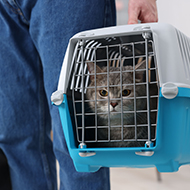
The social media post appears to normalise tube travel with cats.
National feline charity Cats Protection is calling on Transport for London to remove a social media reel that encourages passengers to take their cats on the tube.
The reel, posted to TFL’s official Instagram account, shows cats on leads and outside of their carriers in underground stations and on tube trains, raising concern about animal welfare.
Cats Protection warns the promotion of cats travelling on the tube may encourage more people to travel with their feline on the underground, which can considerably raise stress in cats.
Nicky Trevorrow, senior behaviour manager at Cats Protection, said: “It is disturbing to see Transport for London apparently normalising passengers taking cats on the underground with a social media reel aimed at young people.
"Busy stations and crowded underground platforms with loud and sudden noises, such as trains arriving, announcements, and crowds, should be off limits for cats. It is shocking to think that anyone would travel on the underground with their cat on a lead or draped on their shoulders. It is not only poor welfare, it’s unsafe.”
The charity has formally reached out to TFL expressing their concern, and has urged them to remove the video from their social media channels.
It advises that owners wishing to travel with their cat should use a safe and study carrier with a secure door, and not a cat backpack or collar and lead.
Sarah Elliott, central veterinary officer at Cats Protection, added: “Restraining a cat on a lead or taking it on unnecessary journeys in backpacks can cause significant stress and inhibit a cat’s natural behaviours.
“Cats are territorial and like to roam freely, rather than go on leisure outings away from their familiar home. As well as the obvious safety and welfare concerns, cat harnesses prevent the flight response and feeling trapped can significantly escalate stress in cats.”
© New Africa/Shutterstock.com


 Companies marketing medicines for small pets exempt from authorisation must submit their annual return to the Veterinary Medicines Directorate (VMD) by 30 November 2026.



