
Your data on MRCVSonline
The nature of the services provided by Vision Media means that we might obtain certain information about you.
Please read our Data Protection and Privacy Policy for details.

In addition, (with your consent) some parts of our website may store a 'cookie' in your browser for the purposes of
functionality or performance monitoring.
Click here to manage your settings.
If you would like to forward this story on to a friend, simply fill in the form below and click send.

Your friend's email:
Your email:
Your name:
 
 
Send Cancel

Novel cancer treatment shows promise for cats and humans
Thirty-five per cent of cats in the study had their disease controlled with minimal side effects.

The drug targets the transcription factor STAT 3. 

Researchers at the University of California have conducted the first-ever clinical trial of a new class of targeted therapy for pet cats with head and neck squamous cell carcinoma (HNSCC).

The drug, which is the first to target the transcription factor STAT3, showed promising results, and is likely to be effective for humans with the disease. 

Writing in the journal Cell Press, researchers describe how 35 per cent of cats in the study had their disease controlled with minimal side effects. Among them was a nine-year-old black domestic shorthair named Jak, who lived eight months after his diagnosis, and much longer than expected.

Jak’s owner, Tina Thomas, said: “It was meaningful to us because he was here in our lives. During that time, my son finished college and my daughter finished her master’s program. Jak got to spend one more Christmas with us, and he loved our Christmas tree. He was worth every bit of the effort.” 

Interestingly, researchers believe conducting clinical trials in pets could be a better model of how drugs work in humans, compared with lab mice. The team is currently working with a small biotech firm to advance the treatment in clinical trials for pets and humans. 

First author Jennifer Grandis, said: “This study is a great example of how we can think more carefully about spending our very limited resources on studies in lab mice that are not even the best models of human cancers.

“By partnering with veterinary oncologists and doing clinical trials in companion animals, we can learn an enormous amount about how these drugs work while also helping people’s pets. None of the cats in these trials were harmed, and many of them benefited.” 

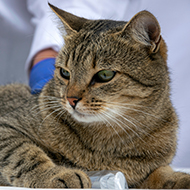
Image (C) Shutterstock.

Become a member or log in to add this story to your CPD history

Defra shares new Sanitary and Phytosanitary guidance

News Story 1
 Defra has published guidance for the vet sector ahead of a proposed UK-EU Sanitary and Phytosanitary agreement.


The agreement, which will change the movement and trade of animals and related products, could see reductions in checks, paperwork and certification. As well as describing regulatory developments, the advice highlights the importance of animal ID, registration and traceability in disease control and other compliance arrangements.

The guidance can be found here. More detail is expected as negotiations progress. 

Click here for more...
News Shorts
BSAVA publishes fifth Manual of Canine and Feline Neurology

The BSAVA has published the fifth edition of its BSAVA Manual of Canine and Feline Neurology.

The new edition has been reviewed and updated, including new developments in diagnostics, therapeutic approaches and clinical decision-making. It is structured to support clinicians through diagnosis, treatment and long-term management.

The guide features five new chapters covering acute myelopathies, chronic myelopathies, emergency protocols, neurotoxicology and neuro-oncology.

It also includes over 100 videos, including demonstrations of neurological examinations, clinical presentations and diagnostic procedures.

Nicola Lloyd, publishing manager, said: "Whether you're a general practitioner seeking practical guidance, or a specialist aiming to refine your expertise, this edition remains an indispensable reference for anyone involved in the care of neurologically compromised dogs and cats."
