Your data on MRCVSonline
The nature of the services provided by Vision Media means that we might obtain certain information about you.
Please read our Data Protection and Privacy Policy for details.

In addition, (with your consent) some parts of our website may store a 'cookie' in your browser for the purposes of
functionality or performance monitoring.
Click here to manage your settings.
If you would like to forward this story on to a friend, simply fill in the form below and click send.

Your friend's email:
Your email:
Your name:
 
 
Send Cancel

BVA issues Easter reminder to pet owners
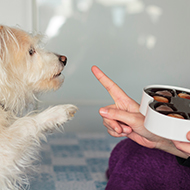
The VPIS received more than 100 enquiries about animals eating chocolate last year.

VPIS statistics underscore importance of hiding ’toxic’ treats.

As the Easter festivities get underway, the British Veterinary Association is reminding pet owners to keep toxic traditional treats well out of their pet’s reach.

The warning comes after figures from the Veterinary Poisons Information Service reveal it received more than 100 enquiries about animals eating chocolate last year. 

Perhaps unsurprisingly, the figures show half of all enquiries about pets ingesting hot cross buns come at Easter. Eighty per cent of the enquiries related to dogs consuming chocolate, with 15 per cent relating to cats and three per cent to rabbits.

BVA junior vice president Rob Williams said: “Chocolate eggs and hot cross buns are just a few of the treats which spring onto the shelves at this time of year. While they are delicious for us, the VPIS statistics show they are also tempting – but toxic - to our pets. 

“Many of us will know the dangers that chocolate presents to dogs, but other pets such as cats and rabbits can also become seriously unwell if they eat it, while hot cross buns also contain vine fruits which is particularly toxic too. It’s best to make sure that all sweet treats and tempting titbits are kept out of reach of your pets to avoid emergency vet visits, but if you think your pet has eaten something they shouldn’t, it’s really important that you speak to your vet – it could save their life.”

The Veterinary Poisons Information Service (VPIS) provides emergency advice to veterinary professionals and runs Animal PoisonLine, a 24-hour specialised emergency telephone service dedicated to helping pet owners.

Image (C) Shutterstock.

Become a member or log in to add this story to your CPD history

RCVS announces 1CPD app update

News Story 1
 The RCVS has announced a new version of its 1CPD mobile app, with enhanced features for veterinary surgeons and veterinary nurses to record their continuing professional development.

The mobile app includes a new 'what would you like to do?' shortcut for frequent tasks, a notification badge, and the ability to scan a QR code from the home screen to easily record an activity.

Users will be prompted to update the app from the App Store or Google Play the next time they log in. For more information, visit RCVS.org.uk 

Click here for more...
News Shorts
Nominations open for RCVS and VN Council elections

The nomination period for the 2026 RCVS Council and VN Council elections is now open, with three veterinary surgeon seats and two veterinary nurse seats available.

Prospective candidates can download an information pack and nomination form from the RCVS website. Individuals can nominate themselves for the elections, with the results to be announced in the spring.

Clare Paget, the recently appointed RCVS Registrar and elections returning officer, said: "If you want to play your part in influencing and moulding how the professions are regulated, and making key decisions on matters of great importance to your peers, the public and animal health and welfare, please consider standing for RCVS Council or VN Council next year."

Nominations close at 5pm on Saturday, 31 January 2026.