Your data on MRCVSonline
The nature of the services provided by Vision Media means that we might obtain certain information about you.
Please read our Data Protection and Privacy Policy for details.

In addition, (with your consent) some parts of our website may store a 'cookie' in your browser for the purposes of
functionality or performance monitoring.
Click here to manage your settings.
If you would like to forward this story on to a friend, simply fill in the form below and click send.

Your friend's email:
Your email:
Your name:
 
 
Send Cancel

Vets urged to use tool to check nematodirus risk
Lambs born from mid-February onwards are currently at the highest risk, according to the forecast.

Temperature fluctuations are making hatching difficult to predict, says SCOPS.

Vets and farmers are once again being advised to make use of the Sustainable Control of Parasites in Sheep (SCOPS) Group forecast tool to identify when lambs might be susceptible to nematodirus.

Independent sheep consultant Nerys Wright says: “The SCOPS Nematodirus Forecast is an essential tool due to the role of temperature on the larvae of this worm species. This year in particular we have seen some significant fluctuations in temperatures, making the time of hatching difficult to predict without the forecast. 

“Currently, the map indicates there are some very high risk areas, as marked by black dots, which is earlier than in previous years. Lambs born from mid-February onwards that are old enough to be grazing are currently at the highest risk. Most March-born lambs are currently too young to be affected.”

Analysing forecast data from 2019 to 2024, SCOPS show how temperature fluctuations influence the timing of the nematodirus hatch. Their study reveals variations in the very high-rise periods for two weather stations, one in England and the other in Scotland.

Dr Wright adds: “The range between the earliest and latest onset of very high-risk varies by six to seven weeks over a five-year period, highlighting that treatment at set times is unlikely to be effective. 

"Neither can we risk a wait-and-see approach because when an outbreak occurs, as Nematodirus can rapidly cause severe harm or even death to a large number of lambs. The forecast helps to pinpoint the timing of any treatment given.” 

The SCOPS forecast uses local weather conditions to predict the hatching of nematodirus larvae. The interactive map is updated every day with data from 140 weather stations to provide a guide to the risk level throughout the UK.

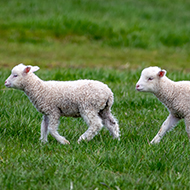
Image (C) Shutterstock.

Become a member or log in to add this story to your CPD history

RCVS announces 1CPD app update

News Story 1
 The RCVS has announced a new version of its 1CPD mobile app, with enhanced features for veterinary surgeons and veterinary nurses to record their continuing professional development.

The mobile app includes a new 'what would you like to do?' shortcut for frequent tasks, a notification badge, and the ability to scan a QR code from the home screen to easily record an activity.

Users will be prompted to update the app from the App Store or Google Play the next time they log in. For more information, visit RCVS.org.uk 

Click here for more...
News Shorts
Nominations open for RCVS and VN Council elections

The nomination period for the 2026 RCVS Council and VN Council elections is now open, with three veterinary surgeon seats and two veterinary nurse seats available.

Prospective candidates can download an information pack and nomination form from the RCVS website. Individuals can nominate themselves for the elections, with the results to be announced in the spring.

Clare Paget, the recently appointed RCVS Registrar and elections returning officer, said: "If you want to play your part in influencing and moulding how the professions are regulated, and making key decisions on matters of great importance to your peers, the public and animal health and welfare, please consider standing for RCVS Council or VN Council next year."

Nominations close at 5pm on Saturday, 31 January 2026.