


Harrowing tales of equine suffering reported in Ukraine
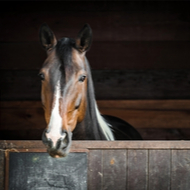
"Some of the lorry drivers I have met coming out have been shot at, shelled and beaten up, evacuating surviving horses" - David Rendle.
The British Equine Veterinary Association (BEVA) is highlighting the suffering of horses and their carers in Ukraine, and is calling for urgent financial support in association with the British Equestrians for Ukraine Fund.
David Rendle, president elect of BEVA returned from the Polish-Ukrainian border earlier this week after delivering essential veterinary supplies to support, treat and relocate horses from Ukraine.
“Horses remain under serious threat within occupied areas of the Ukraine, with horrendous accounts of animals continuing to be maimed or killed, while grooms and carers risk their own lives by refusing to abandon them,” said David, who received pictures and testimony of many attacks carried out on stables in Bucha, Irpin and other premises north of Kyiv.
David continued: “It is hard to understand what could motivate anyone to perform these deliberate acts of cruelty.
“Random shootings, stabbings and burnings are widely reported and pictured on social media, we have no idea how many horses are dead and how many injured, but it has to be a significant number.
“Some of the lorry drivers I have met coming out have been shot at, shelled and beaten up, evacuating surviving horses. They are taking risks that we would consider totally unacceptable to move animals out and supplies in; I have nothing but admiration for the bravery of the Ukrainian people.
“Ever conscious that there is an equal humanitarian need you feel very small and rather cowardly that you aren’t permitted to go into Ukraine to help the people and animals that require treatment.”
Ukrainian veterinary surgeon Anatoly Levitsky, who is working in Kyiv, gave BEVA an account of one stable near Borodianka, where the horses, which were supporting children with medical conditions, were cruelly attacked by the Russian army.
“When Russian bandits in army uniform came to the village, they set fire to the stable and started shooting the horses that tried to escape,” said Anatoly.
“Some horses ran away, others were wounded, and some were burned down. After the building was burned, Russian soldiers went away and horses that escaped were wandering around the village and trying to find the feed.
“Step by step, people living in the village collected the horses and keep one or two horses in their yards.
“They reached out a young veterinary doctor, Zhenia Verbinets, and asked her to come to village and to heal a wounded horse. She conducted field operation, removed a lot of bullets from body of the animal. She obtained information that horses have nothing to eat. Next morning a truck with hay was sent to this village. Maybe this action will save lots of other animals.
“Now we control this situation and will be ready to send the food for the horses as soon as they need. The owner has called us and expressed his gratitude, but we are thankful to all people who keep with horses in their yards.
“Now we are at the stage when food for horses is more important than the medicine, but everything is connected. While I write letter to you, Zhenia Gorpinich is treating the horse with colic and of course needs medicines or even surgery.”
The British Equestrians for Ukraine Fund is accepting donations to fund urgent veterinary treatment, supplies and the relocation of endangered horses. To make a donation visit the website here.


 Veterinary practices are being urged to help owners safely dispose of any unused and expired pet medicines - not just antibiotics - during November's Animal Medicines Amnesty.



