


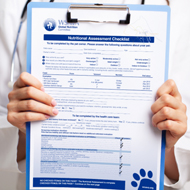
The course is free to WSAVA members and is suitable for all veterinary professionals.
The World Small Animal Veterinary Association (WSAVA) has released an online nutrition course, comprised of four modules.
Developed by the WSAVA's Global Nutrition Committee (GNC), the course aims to further veterinary understanding of the value of nutritional assessments, alongside assisting veterinary professions in making feeding and monitoring plans and advising clients on nutrition.
Initiated by the WSAVA's Continuing Education Committee (CEC), the course is available free of charge to WSAVA members. It is aimed at veterinary surgeons, veterinary technicians, veterinary nurses and veterinary students, although the WSAVA assures that the course is also suitable for anyone with an interest in pet food selection criteria and body condition scoring.
Dr Jane Armstrong, chair of WSAVA CEC, said: "The CEC is delighted to see the GNC’s Global Nutrition Guidelines brought to life in such a user-friendly form. This course is a valuable addition to the online offerings available on the WSAVA Academy.
“Thanks to the generosity of our Diamond Partner, the Purina Institute, we are pleased that the important foundational nutritional information it contains is freely available to all WSAVA members.
“As the International Veterinary Students Association is an affiliate member of WSAVA, veterinary students around the world will also enjoy free access to the modules, which is particularly great news."
Featuring narrated and interactive e-learning, videos, downloadable resources, multiple choice questions and drag and drop activities, the modules are currently available in English, Spanish, Russian and Mandarin Chinese. RACE accreditation of the course is underway.
Co-chair of the GNC, Dr Marge Chandler, said of the course content: “The modules were designed as an engaging and practical way for the practice team to incorporate nutritional assessments into everyday practice around the world, thus bringing added value to their patients and clients.”
Images (C) WSAVA


 Companies marketing medicines for small pets exempt from authorisation must submit their annual return to the Veterinary Medicines Directorate (VMD) by 30 November 2026.



