


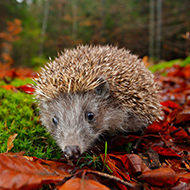
Hedgehogs have carried the superbug long before human antibiotic use.
Scientists at the University of Cambridge, along with other international institutions, have discovered that a type of MRSA arose in hedgehogs and existed in nature 200 years before the use of antibiotics in humans and livestock.
Human and livestock use of antibiotics has traditionally been blamed for the emergence of the antibiotic resistant superbug, however, these new findings suggest that the initial emergence of MRSA was a natural biological process.
Hedgehog surveys from Denmark and Sweden discovered that up to 60 per cent of hedgehogs carry a type of MRSA called mecC-MRSA, while high levels of MRSA were discovered on hedgehogs across Europe and New Zealand.
Senior author of the study, Dr Ewan Harrison, said: “Using sequencing technology we have traced the genes that give mecC-MRSA its antibiotic resistance all the way back to their first appearance, and found they were around in the nineteenth century.
“Our study suggests that it wasn’t the use of penicillin that drove the initial emergence of MRSA, it was a natural biological process. We think MRSA evolved in a battle for survival on the skin of hedgehogs, and subsequently spread to livestock and humans through direct contact.”
The current thinking is that this antibiotic resistance evolved in Staphylococcus aureus as an adaptation to existing alongside the fungus Trichophyton erinacei on the skin of hedgehogs, which produces its own antibiotics.
Professor Mark Holmes, senior author of the report and researcher at the University of Cambridge, commented on how the study supports careful use of antibiotics to lessen the significant threat to human health that MRSA poses: “This study is a stark warning that when we use antibiotics, we have to use them with care.
“There’s a very big wildlife ‘reservoir’ where antibiotic-resistant bacteria can survive – and from there it’s a short step for them to be picked up by livestock, and then to infect humans.”
Dr Sophie Lund Rasmussen of WildCRU, University of Oxford, and co-author of the study explains: "Even though this finding is news to us, the hedgehogs have carried this bacterium for at least 200 years without causing any major infections in humans.
"Therefore, the advice is as always, to appreciate and support the hedgehogs entering your garden and to maintain a good hand hygiene when feeding and possibly handling hedgehogs. Both for the sake of the hedgehogs and ourselves."
Published in Nature, the study 'Emergence of methicillin resistance predates the clinical use of antibiotics' is a collaborative effort including the University of Cambridge, the Wellcome Sanger Insitute, Denmark's Serum Statens Institut and the Royal Botanic Gardens, Kew, and is free-to-access.


 Veterinary practices are being urged to help owners safely dispose of any unused and expired pet medicines - not just antibiotics - during November's Animal Medicines Amnesty.



