


Baby bats babble like human infants - study
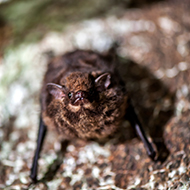
Researchers at Berlin’s Museum of Natural History studied the babbling behaviour of 20 greater sac-winged bat pups.
A new study by researchers in Germany has revealed that baby bats babble much like infant humans.
The study, published in the journal Science, found that bat pup babbling is rhythmic and involves the repetition of key syllables, similar to da-da-da in human babies.
"Pup babbling is a very conspicuous vocal behaviour, it is audible at a considerable distance from the roost, and babbling bouts have a duration of up to 43 minutes,” said study author Martina Nagy. “While babbling, pups learn the song of the adult males."
In the study, researchers at Berlin’s Museum of Natural History studied the babbling behaviour of 20 greater sac-winged bat pups in their natural habitat. They took daily acoustic recordings of the bats in their roosts and filmed the pups from birth until weaning.
The team then analysed the recordings to investigate the characteristics of pup babbling, and found that pup babbling is characterized by the same eight features as human infant babbling. “For example, pup babbling is characterized by reduplication of syllables, similar to the characteristic syllable repetition – /dadada/ – in human infant babbling," explained co-author Lara Burchardt.
Reseacrhers also found that pup babbling is rhythmic and occurs in both male and female pups – a discovery that stands in stark contrast to songbirds, where only young males babble.
Co-author Mirjam Knörnschild said: "It is fascinating to see these compelling parallels between the vocal practice behaviour of two vocal learning mammals.
“Our study is contributing to the interdisciplinary field of biolinguistics, which focusses on the biological foundations of human language to study its evolution. Work on a vocal learning, babbling bat species may ultimately give us another piece of the puzzle to better understand the evolutionary origin of human language.”


 Veterinary practices are being urged to help owners safely dispose of any unused and expired pet medicines - not just antibiotics - during November's Animal Medicines Amnesty.



