
Your data on MRCVSonline
The nature of the services provided by Vision Media means that we might obtain certain information about you.
Please read our Data Protection and Privacy Policy for details.

In addition, (with your consent) some parts of our website may store a 'cookie' in your browser for the purposes of
functionality or performance monitoring.
Click here to manage your settings.
If you would like to forward this story on to a friend, simply fill in the form below and click send.

Your friend's email:
Your email:
Your name:
 
 
Send Cancel

UK EHV-1 risk ‘nearing normal levels’
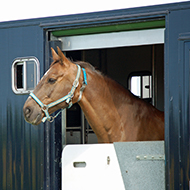
EHV-1 spreads among horses through close contact and coughing.
British Equestrian issues update following the outbreak in Europe.

British Equestrian (BEF) has issued an important update on the equine herpes virus (EHV-1) outbreak circulating within Europe.

On Wednesday (7 April), the Federation said that EHV-1 risk in the UK is 'nearing normal levels'. However, equine health certificates will be required for UK gatherings ‘for the foreseeable future’.

It said its Infectious Diseases Action Group (EIDAG) had considered data over the last three years, concluding that the risk level ‘is now dropping towards the baseline number of cases seen in any other year’. 

Welcoming the news, BEF chief executive Jim Eyre said: “We know that EHV is endemic in this country, but the threat posed by the European outbreak was a cause for great concern. I’d like to thank the member bodies and all their riders, owners and grooms, who embraced and followed the protocols so readily and with such commitment."

EHV-1 is a fatal disease that spreads among horses through close contact and coughing. The virus transmits via clothing or other objects, but it is more likely to spread between horses within stables and enclosed buildings. 

The recent outbreak, which originated at a showjumping event in Valencia, has so far claimed the lives of 18 horses across Europe and led to the cancellation of several international events. 

A BEF spokesperson said: “The EIDAG encourages event organisers to continue to request that competitors complete a self-certification of equine health and freedom from disease contact form. However, the group anticipates that by 12 April, it may be possible to remove the current restriction that, to attend UK horse gatherings, horses must have been resident in this country for the last 28 days. 

“A new template will be circulated to British Equestrian’s member bodies to remove this restriction after 12 April, providing that the current disease risk level continues to fall.”
Become a member or log in to add this story to your CPD history

FIVP publishes CMA Compliance Checklist

News Story 1
 FIVP has published a CMA Compliance Checklist to support independent practices with the Market Investigation Order.

The document includes deadlines for small and large businesses, with tick boxes for each of the tasks. The organisation also invites practices to contact them for support with requirements.

Rita Dingwall, FIVP chair, said: FIVP appreciates that navigating the new CMA requirements can feel daunting. We hope this checklist will make things a little easier, helping independent practices work through what is required with confidence. 

Click here for more...
News Shorts
APHA launches free virtual work experience programme

The Animal and Plant Health Agency (APHA), in collaboration with Springpod, has launched a free virtual work experience programme, giving young people across the UK the chance to explore careers dedicated to protecting animal and plant health.

The on-demand programme offers a unique insight into career opportunities within APHA, showcasing how students can contribute to tackling some of the UK's most critical biosecurity and environmental challenges.

Designed for students aged 13 and over, the course includes more than 10 hours of engaging content featuring real-life industry insights, scenario-based challenges, and practical guidance on applying for jobs. To register for the course, visit the APHA website.

