


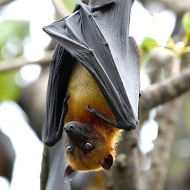
Researchers identify coronaviruses in pangolins and bats that are genetically similar to SARS-CoV-2.
New clues about the potential animal origin of COVID-19 have been unveiled in a new study led by researchers at the Roslin Institute and Aberystwyth University.
Writing in the journal MDPI Viruses, scientists suggest that an ancestor of the virus was once present in both pangolins and bats before reaching people.
While the results add to previous support for this idea, more work is needed to identify the animal coronavirus that first infected humans, researchers said. Several high-impact coronavirus variants in pangolins and bats identified by the study could also aid further vaccine design and treatments.
Dr Barbara Shih from the Roslin Institute explains: “After examining all publicly available coronavirus genomes for bats and pangolins, we noted a handful of bat coronaviruses and all seven pangolin coronaviruses to be very similar to SARS-CoV-2.
“Our study emphasises the need for further analyses of coronaviruses from suspected animal species. Bridging this knowledge gap may help us better understand the process that enables the virus to infect humans.”
In the study, scientists used a novel hybrid computational approach to compare coronaviruses affecting bats and pangolins to the virus causing COVID-19 in humans (SARS-CoV-2). Their work highlights genes that are specific to coronaviruses affecting each species, as well as parts of genes that are commonly seen in coronaviruses affecting bats and pangolins.
Lead author Nicholas Dimonaco, a PhD student at Aberystwyth University, said: “This work has shown that there are types of coronaviruses found in both pangolins and bats which are genetically more similar to the human SARS-CoV-2 virus than to other viruses from the same hosts.”New clues about the potential animal origin of COVID-19 have been unveiled in a new study led by researchers at the Roslin Institute and Aberystwyth University.
Writing in the journal MDPI Viruses, scientists suggest that an ancestor of the virus was once present in both pangolins and bats before reaching people.
While the discovery adds to the previous support for this theory, more work is needed to identify the animal coronavirus that first infected humans, researchers said.
Several high-impact coronavirus variants in pangolins and bats identified by the study could also aid further vaccine design and treatment.
Dr Barbara Shih from the Roslin Institute explains: “After examining all publicly available coronavirus genomes for bats and pangolins, we noted a handful of bat coronaviruses and all seven pangolin coronaviruses to be very similar to SARS-CoV-2.
“Our study emphasises the need for further analyses of coronaviruses from suspected animal species. Bridging this knowledge gap may help us better understand the process that enables the virus to infect humans.”
In the study, scientists used a novel hybrid computational approach to compare coronaviruses affecting bats and pangolins to the virus causing COVID-19 in humans (SARS-CoV-2). Their work highlights genes that are specific to coronaviruses affecting each species, as well as parts of genes that are commonly seen in coronaviruses affecting bats and pangolins.
Lead author Nicholas Dimonaco, a PhD student at Aberystwyth University, said: “This work has shown that there are types of coronaviruses found in both pangolins and bats which are genetically more similar to the human SARS-CoV-2 virus than to other viruses from the same hosts.”

 The latest



