


Owners urged to think before rugging their horse
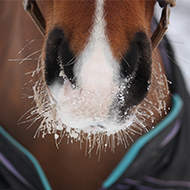
"There are many reason why we may not need to rug our horses, the most obvious one being weight gain" - Ruth Court, Blue Cross.
National animal charity Blue Cross is calling on horse owners to think carefully before rugging their horses this winter.
The charity says that even though hoses might look 'cute and snug' wrapped up in a rug, it might not be the kindest or healthiest course of action for them.
Ruth Court, horse welfare manager at Blue Cross, said: “As winter approaches, it’s tempting to reach for the extra rugs, but does your horse actually need a rug at all?
“There has been a lot of research around rugging in recent years and there are many reasons why we may not need to rug our horses, the most obvious one being weight gain.”
The national charity has put together the following list of points for owners to consider when deciding whether to rug their horses:
Self-protection: Horses are programmed to protect themselves in bad weather, turn their backs on wind and rain to protect their head, neck, eyes, ears and belly.
Natural shelter: They may choose natural shelters such as hedges and trees and keep together to share body warmth. Or they may have access to a field shelter.
Natural insulation: Horses with frost on their backs may look cold but they are quite the opposite as very little body heat is escaping through the air which is why the frost hasn’t melted.
Compromised thermoregulation: The horse has a very efficient coat covered with tiny hairs. The hair erector muscles for each hair need ‘exercising’ to work efficiently and over rugging may compromise this natural mechanism.
Heat imbalance: Over rugging mean that the horse warms up under the rug but not in other exposed areas.
Over-heating: If the horse becomes too hot under the rug, he doesn’t have a natural ability to cool down and may begin to sweat and become uncomfortable.
Natural weight control: The use of rugs can affect the horse’s natural weight control system. Horses are designed to use fat reserves over winter to keep warm. By keeping horses over rugged and overfed during the winter we are increasing the risk of further weight gain in the spring, increasing the risk of laminitis.
Forage: munching and digesting forage for 24 hours a day will help generate heat to keep a horse warm naturally.
Individual needs: There are some exceptions to the rugging rule: lighter, elderly or unwell horses may benefit from the additional warmth of a rug. Clipped horses and stabled horses with restricted movement may also appreciate a rug.
Ruth added: “Horses have evolved to deal with the cold. As long as we meet their basic management needs by providing ad lib forage, water, equine companionship and access to shelter they should be comfortable and warm with the lightest of rainsheets or no rugs at all.
“Do remember to make any changes gradually though, to give them time to adapt their natural heating system and they must be checked at least once a day to be sure that they are happy in the field.”


 Veterinary practices are being urged to help owners safely dispose of any unused and expired pet medicines - not just antibiotics - during November's Animal Medicines Amnesty.



