


Study highlights impact of climate change on freshwater fish
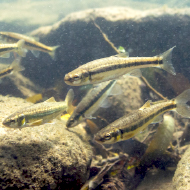
Scientists set out to see if living in warm water could affect cold-blooded freshwater fish.
Climate change could leave freshwater fish with bigger brains but reduce their ability to explore their surroundings, according to a study by the University of Glasgow.
The study published in the Journal of Experimental Biology found that fish may undergo significant psychological changes when adapting to rising water temperatures, which could affect their ability to find food.
In the study, scientists set out to see if living in warm water could affect cold-blooded freshwater fish. They fished minnows from the River Kelvin, located close to the university, and split them into two groups.
The team raised one group of minnows in a tank filled with water at the usual temperature of 14°C, the others were raised in tanks heated to 20°C - the predicted temperature of the River Kelvin by the end of the 21st century.
They spent the following eight months observing each minnow's physiology and behaviour, paying special attention to how they interacted with their environment.
By measuring the minnows' oxygen consumption at rest and during exercise, researchers found that the fish in warmer tanks used more energy in both states, suggesting their metabolisms had increased as they adapted to the heat.
The team also noted that minnows from the warmer tanks developed bigger brains than the cooler fish. But despite the increase in brain size, their performance was significantly poorer in a test designed to measure their ability to navigate and find food.
“While the minnows we studied were able to adapt to live in the warmer water, their reduced ability to find their way around in order to catch food does raise some questions,” said lead author Dr Libor Zavorka. “Although we found their brains were larger, they seemed less able to accomplish the simple tasks that minnows carry out every day.”
she continued: “It’s likely that the expansion of brain tissue isn’t accompanied by an expansion of neural density, so their brains don’t provide any additional benefits for being larger. Brain tissue requires a lot of energy to maintain, so it’s likely that the minnows’ bigger brains act solely as a drain on their resources.
“As their metabolisms increase to cope with the larger brains and the increased temperature of the water, they will need to eat more to fuel their bodies – but if they are less able to find food efficiently, they will need to spend more energy looking for it.”


 Veterinary practices are being urged to help owners safely dispose of any unused and expired pet medicines - not just antibiotics - during November's Animal Medicines Amnesty.



