


New insights into foot and mouth disease virus
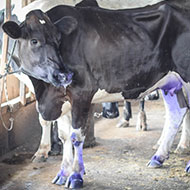
Scientists previously thought that FMDV evolution is mainly driven by mutations caused by small copying errors.
A study by the Pirbright Institute has revealed new insights into the evolution of foot and mouth disease virus (FMDV).
The research, published in PLOS Pathogens, found that different FMDV populations swap sections of genetic material at a far higher rate than previously thought. The information will help scientists understand how the frequency of these changes can shape virus evolution and cause new outbreaks.
Until now, scientists believed that FMDV evolution is mainly driven by mutations - caused by small copying errors that accumulate in the RNA genome of the virus when it replicates, known as substitutions. In this new study, however, researchers show that mutations caused by viral recombination events, where different FMD viruses infecting the same animal swap sections of their genome, occur almost as often as substitutions.
To show that these recombination events occur, the team injected African buffaloes with two similar FMDV strains, and then examined changes in regions of the genomes that code for proteins in the FMDV outer shell, called the capsid. The host immune system targets capsid proteins to control infection, but changes in those proteins can sometimes prevent the immune system from recognising the virus, allowing it to ‘escape’ and potentially cause a new outbreak.
Their study also revealed that levels of recombination were up to 40 times higher in the initial phase of infection compared to later on during the persistent phase, indicating that new variants of FMDV are most likely to be created soon after an animal becomes infected.
The results align with previous research by Pirbrgith that demonstrates persistently-infected African buffaloes are unlikely to generate new FMDV variations and cause new outbreaks. Researchers say this is important because African buffalo act as a reservoir for FMD, carrying the virus for years without presenting clinical signs.
“The number of recombination events we saw between the two viruses used in this research was surprising”, said Professor Bryan Charleston, Director of The Pirbright Institute. “This tells us that recombination is a major driver of FMDV evolution and understanding the mechanisms that determine how new strains are generated could help researchers analyse emerging FMD outbreaks in the field.”


 Companies marketing medicines for small pets exempt from authorisation must submit their annual return to the Veterinary Medicines Directorate (VMD) by 30 November 2026.



