


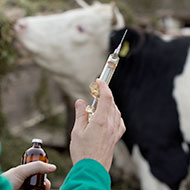
Disease can be prevented through vaccination and biosecurity management
Vets and SQPs are being advised to hold conversations early with cattle farmers about the management of leptospirosis and the advantages of vaccination.
Leptospirosis is a costly disease, thought to cost farmers an average of £270 a cow. However, experts at MSD Animal Heath stress that the disease can be prevented through vaccination and biosecurity management.
“We need to help farmers understand the impact of leptospirosis infection on their herd, with many not aware of their herd’s current infection status unless there has been a serious outbreak,” commented Steph Small, MSD Animal Health dairy veterinary advisor.
“Vets can open the conversation about clinical signs, including a drop in milk yield, fever, loss of appetite and abortion. However, more often there may be a long-term economic impact of infection caused by more insidious signs, including reduced fertility and overall cow performance.”
MSD Animal Health notes that the key prevention measure is vaccination, starting with heifers and continuing with annual boosters throughout the cow’s lifetime.
“Vaccination is the most reliable method of control, preferably with a vaccine licensed to protect against both strains of leptospirosis present in the UK, L. borgpetersenii hardjo and L. interrogans hardjo, such as LEPTAVOID®-H,” Steph continues.
“Not only does LEPTAVOID-H protect against both strains, but it has also been proven to increase conception rates where leptospirosis is diagnosed as a cause of infertility. In split herd trials, cows vaccinated with LEPTAVOID-H had a 20 per cent higher conception rate than unvaccinated cows.”
Steph reiterates that, with the high-risk period of infection at spring turnout, the timing of advising farmers.
“Having these discussions over the winter about current herd infection status and leptospirosis prevention strategies will allow protocols to be implemented in time,” concludes Steph.


 Eligible members of BEVA will be able to vote for their Council team until Monday, 17 August 2026. Members will have received an election email on 17 July.



