


Study reveals insights on zookeeper-animal bond
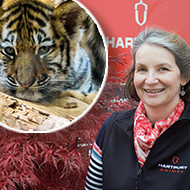
Vicki Melfi, professor in human-animal interactions at Hartpury University.
The complex relationship that can exist between zookeepers and their animals has been revealed in a new study, led by researchers at the universities of Hartpury, Chester and Bolton.
The study, published in the journal Anthrozoos, explored how zookeepers reflected on their experiences with the different species they care for, while ensuring they work professionally to ensure high standards of care.
It found that zookeepers entered the job “for the love of animals.” However, they drew boundaries with the animals in their care to reduce interference with normal behaviour and to maintain illusions of ‘nature’ in a zoo environment.
Researchers found these behaviours can be difficult to maintain during the relationship for various reasons. For example, if a keeper needed to raise an animal by hand because the mother had abandoned her offspring.
“Our study highlighted that zookeepers are expected to distance themselves from the wild animals they’re working with. Yet many zookeepers interact more with the animals in their care on a daily basis, than many people may do with their pets,” explained Vicki Melfi, professor in human-animal interactions at Hartpury University.
“Zookeepers are expected to give the animals as much love and compassion as they’d give to their pets, but these ‘wild’ animals are not pets so they need to maintain emotional and physical distance. When we asked the zookeepers how they managed to achieve that, what came through consistently was that zookeepers always put the welfare and long-term interest of the animals first.”
Fourteen zookeepers from different establishments in the UK and New Zealand participated in the research. Scientists hope their findings will inform perceptions of the role of the human-animal bond in the management of zoo animals.
“There’s a huge level of humanity displayed by those interviewed in this study, and people who look after animals more widely, by doing the right thing for animal welfare and conservation,” Professor Melfi continued.
“Hopefully, this report will help give due credit to the professionalism and the level of understanding and care of those working within the zoo industry.”


 Veterinary practices are being urged to help owners safely dispose of any unused and expired pet medicines - not just antibiotics - during November's Animal Medicines Amnesty.



