
Your data on MRCVSonline
The nature of the services provided by Vision Media means that we might obtain certain information about you.
Please read our Data Protection and Privacy Policy for details.

In addition, (with your consent) some parts of our website may store a 'cookie' in your browser for the purposes of
functionality or performance monitoring.
Click here to manage your settings.
If you would like to forward this story on to a friend, simply fill in the form below and click send.

Your friend's email:
Your email:
Your name:
 
 
Send Cancel

Humane slaughter of wild fish
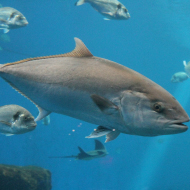
There is good evdence that wild-caught fish may experience significant suffering
Funding to encourage development and adoption of humane methods

Billions of fish are caught for food every year – the vast majority of these fish are not stunned before killing, and there is good evidence that many wild-caught fish may experience significant suffering between the time they are captured and their death.

The Humane Slaughter Association (HSA) has announced funding of up to £200,000 to support a systematic review and feasibility study into the stunning or killing of wild-caught fish in commercial fisheries. It hopes to encourage the development and adoption of humane slaughter methods.
 
The specific aim of this research is to investigate the feasibility of the development and use of methods of humane stunning or stun/killing for wild-caught fish in order to minimise pain or distress in commercial fisheries. The work should also consider the sustainability of such methods – economic, environmental, ethical and social considerations, including practicality. 

The research is expected to consist of three major components:
  • an overview of the worldwide wild-capture fishing industry
  • a systematic review of any existing relevant research into the stunning of wild-caught fish
  • a feasibility analysis of which fishing system, species of fish, geographical fishing area is most likely to be amenable to the adoption of routine stunning of wild-caught fish.

Applications should be made via the HSA website. The deadline for receipt of applications is the 10 January 2020 with the aim of making an award by April 2020.

Become a member or log in to add this story to your CPD history

Annual submission deadline small pet animal exemptions

News Story 1
 Companies marketing medicines for small pets exempt from authorisation must submit their annual return to the Veterinary Medicines Directorate (VMD) by 30 November 2026.


Submitting this annual return ensures continued compliance with regulatory requirements for products marketed without a full Marketing Authorisation. The exemption specifically applies to products intended for animals, cage birds, terrarium animals, small rodents, ferrets and rabbits.

For further details and submission guidelines, visit the gov.uk website.  

Click here for more...
News Shorts
Bluetongue RZ extended across Scotland

The Scottish Government has announced an extension to a Bluetongue Restricted Zone that is in place in south-west Scotland.

From 3 October, the Restricted Zone will be extended to cover the whole of Scotland. The Animal, Plant and Health Agency (APHA) says this is in response to further disease spread, as well as simplify trading conditions ahead of the autumn.

Since the whole country will share a disease status, it will no longer be necessary to have a movement license to move susceptible livestock around the country. Restrictions on germinal products remain.

As of 1 October 2026, there were 1,979 cases of BTV-3 in England, 389 cases in Wales and 40 cases in Scotland.