


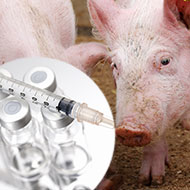
Researchers use model to study effectiveness of PSSR vaccines
A new model to predict the effectiveness of vaccines in livestock has been developed by scientists at The Roslin Institute.
Researchers found that, when applied appropriately, even imperfect vaccines can prevent, mitigate or eliminate the prevalence of disease.
Scientists say the study has implications for the design of vaccines and vaccination programmes in livestock. Professor Andrea Wilson from the Roslin Institute explains:
“Veterinary vaccines often only confer limited immunity and thus may not prevent infection. In this study, we developed a model that combines epidemiological consequences of different vaccination strategies and different vaccine properties applied to livestock.
“The model is successful in predicting the effectiveness of vaccines in livestock.”
The overall aim of vaccination is to protect animals from disease and reduce the risk of disease outbreaks. The new model shows that combining diverse vaccine properties could have a multiplicative effect and may, therefore, be more effective.
In the study, scientists used the model to study the effectiveness of vaccines to combat Porcine Reproductive and Respiratory Syndrome (PRRS) virus.
Endemic in most pig-producing countries, PRRS causes breathing problems and can be fatal in young animals. However, vaccines to prevent the spread of the disease have mostly failed
Scientists believe the new model shows that the control or elimination of PSSR through vaccination may well be in reach, so long as the vaccine speeds up recovery and reduces virus replication.


 Eligible members of BEVA will be able to vote for their Council team until Monday, 17 August 2026. Members will have received an election email on 17 July.



