


PAW report raises concerns about anti-vax movement
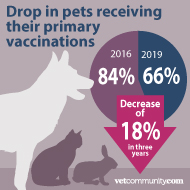
The number of UK pets receiving primary vaccinations has fallen by 18 per cent in just three years, according to new figures.
Findings from the 2019 PDSA Animal Wellbeing (PAW) report have fuelled concerns that the ‘anti-vax’ movement in humans may also be affecting pets.
Primary vaccinations for dogs, cats and rabbits fell dramatically from 84 per cent in 2016, to 66 per cent in 2019, potentially leaving millions of pets at risk from deadly diseases.
Furthermore, a third of pets (32 per cent) are not receiving regular booster vaccinations.
Pet owners who did not vaccinate their pets said they chose not to because they felt it was ‘too expensive’ (17 per cent), their pet does not come into contact with other animals (17 per cent), vaccination is ‘unnecessary’ (16 per cent) or their pet ‘finds going to the vet very stressful’ (13 per cent).
PDSA senior vet Sean Wensley said: “It’s very worrying for vets and vet nurses to see a consistent decline in the number of pets receiving their primary vaccinations, as well as a third (32%) not receiving regular boosters. A resulting loss of herd immunity could see a resurgence in preventable diseases that can cause considerable suffering and death.”
Other key findings:
- 1.9 million dogs (19 per cent) are left alone for five or more hours a day
- 1.3 million dogs (13 er cent) are not walked everyday
- 31 per cent of dog owners and 56 per cent of cat owners are not aware of their pet’s weight or body condition score
- 43 per cent of cats live in a multi-cat household and 67 per cent of owners do not provide enough litter trays
- 25 per cent of rabbits live in small hutches
- 26 per cent of rabbit owners fail to feed hay as part of the main diet, while 21 per cent feed inappropriate muesli-style diets
- Half of rabbits live alone (49 per cent).


 Veterinary practices are being urged to help owners safely dispose of any unused and expired pet medicines - not just antibiotics - during November's Animal Medicines Amnesty.



