


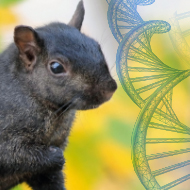
Findings point to faulty pigment gene obtained from fox squirrels
Scientists at Anglia Ruskin University have shed new light on the origins of black squirrels.
Published in BMC Evolutionary Biology, the study found that the black fur is caused by the grey squirrel having a faulty pigment gene - a gene also found in the closely-related fox squirrel.
The fox squirrel, which is native to North America, also has black variants. Testing on grey and fox squirrels across the US and Canada revealed that other “signatures” on the mutated gene are more closely related to the fox squirrel.
Researchers say this suggests that the mutation first arose in the fox squirrel and was passed to the grey squirrel through interbreeding.
“Squirrels take part in ‘mating chases’ where a female squirrel is pursued by lots of male squirrels and eventually one male mates with the female,” explained study leader Dr Helen McRobie.
People have spotted ‘mixed species’ mating chases, with a mix of grey and fox squirrels pursuing a female. The most likely explanation for the black version of the gene being found in the grey squirrel is that a male black fox squirrel mated with a female grey squirrel.”
She continued: “The fact black grey squirrels have become so common right across North America is possibly because black fur offers a thermal advantage, helping them inhabit regions with extremely cold winters. This may have contributed to the expansion of the grey squirrel’s range during the past 11,000 years, following the end of the most recent ice age, helping them spread further north into Canada.”
Black squirrels in the UK are believed to have escaped a private zoo after being imported from the US. They are the same species as grey squirrels, the only difference being their fur colour.
The first wild black squirrel was recorded in Woburn, Bedfordshire, in 1912. Today, they can be found across much of south-east England.


 Veterinary practices are being urged to help owners safely dispose of any unused and expired pet medicines - not just antibiotics - during November's Animal Medicines Amnesty.



