


Staring down seagulls could save your chips, study finds
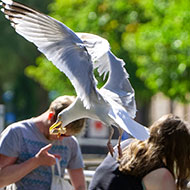
Seagulls get a lot of bad press for stealing people's food.
Seagulls are a common sight at the British seaside, but they get a lot of bad press owing to their reputation for stealing people’s food. But now researchers at the University of Exeter believe they have found a way to keep these feathered scavengers at bay - stare them down!
In the study, researchers placed a bag of chips on the ground and timed how long it took for herring gulls to approach the bag, compared to when the human looked away.
They found that, on average, the gulls took 21 seconds longer to approach the chips with a human staring at them. The results are published in the journal, Biology Letters.
“Gulls are often seen as aggressive and willing to take food from humans, so it was interesting to find that most wouldn’t even come near during our tests,” said lead author Madeleine Goumas, of the Center for Ecology and Conservation at Exeter’s Penryn Campus in Cornwall.
The researchers set out to test 74 gulls, but most flew away or would not approach. Only 27 approached the chips and 19 completed the “looking at” and “looking away” tests.
“Of those that did approach, most took longer when they were being watched,” Goumas said. “Some wouldn’t even touch the food at all, although others didn’t seem to notice that a human was staring at them.”
Senior author Dr Neeltje Boogert added: “Gulls learn really quickly, so if they manage to get food from humans once, they might look for more.
“Our study took place in coastal towns in Cornwall, and especially now, during the summer holidays and beach barbecues, we are seeing more gulls looking for an easy meal. We therefore advise people to look around themselves and watch out for gulls approaching, as they often appear to take food from behind, catching people by surprise.
“It seems that just watching the gulls will reduce the chance of them snatching your food.”


 Veterinary practices are being urged to help owners safely dispose of any unused and expired pet medicines - not just antibiotics - during November's Animal Medicines Amnesty.



