
Your data on MRCVSonline
The nature of the services provided by Vision Media means that we might obtain certain information about you.
Please read our Data Protection and Privacy Policy for details.

In addition, (with your consent) some parts of our website may store a 'cookie' in your browser for the purposes of
functionality or performance monitoring.
Click here to manage your settings.
If you would like to forward this story on to a friend, simply fill in the form below and click send.

Your friend's email:
Your email:
Your name:
 
 
Send Cancel

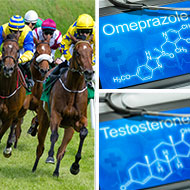
Racing body advises against injectable Omeprazole
Samples of the injectable Omeprazole 100mg/ml (BOVA UK) were found to contain low levels of testosterone.

Product found to contain low levels of testosterone

Injectable Omeprazole should not be used in racehorses due to the presence of testosterone, the British Horseracing Authority (BHA) has advised.

BHA encouraged trainers to discuss alternative treatments with their veterinary surgeons.

Analytical laboratory LGC looked at a number of products containing Omeprazole. Samples of the injectable Omeprazole 100mg/ml (BOVA UK) were found to contain low levels of testosterone.

No oral preparations were found to contain testosterone or any other anabolic steroid.

BHA warned that the possession, use or attempted use of this product could amount to a breach of the Rules of Racing.

Presence of testosterone over the permitted threshold in a sample could result in a 14-month suspension from racing and a 12-month stand down from racing for the horse, as well as other penalties for the Responsible Person.

Trainers and other industry participants were advised to remove the product from all licensed premises and not to administer the product to a thoroughbred from birth until permanent retirement from racing. 

Become a member or log in to add this story to your CPD history

Defra shares new Sanitary and Phytosanitary guidance

News Story 1
 Defra has published guidance for the vet sector ahead of a proposed UK-EU Sanitary and Phytosanitary agreement.

The agreement, which will change the movement and trade of animals and related products, could see reductions in checks, paperwork and certification. As well as describing regulatory developments, the advice highlights the importance of animal ID, registration and traceability in disease control and other compliance arrangements.

The guidance can be found here. More detail is expected as negotiations progress. 

Click here for more...
News Shorts
Lords Committee opens Pet Parasite Medication inquiry

The House of Lords Environment and Climate Change Committee will launch its inquiry into Pet Parasite Medication (PPM) on Wednesday (3 June).

Focusing on treatments containing fipronil and imidacloprid, the inquiry will seek to understand distribution pathways and the impacts of PPM use and non-use on biodiversity and human health. It will also cover current regulation, monitoring, and the potential implications for pets and their owners.

The committee will hear evidence from environmental non-governmental organisations and research institutes. The public can follow the proceedings live on Parliament TV or in person in the Palace of Westminster.

