


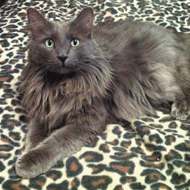
Field trial shows positive results in treating cats with FIP
An anti-viral drug used in human medicine has shown great promise in the treatment of a devastating infectious disease of cats.
One of the most promising treatments for emerging exotic viruses in humans is GS-5734. Studies have proved it to be effective in preventing ebola in rhesus monkeys and inhibiting coronaviruses in tissue culture and mouse model infections.
New research by the University of California (UC) Davis suggests the treatment could also offer hope to cats with feline infectious peritonitis (FIP), which is estimated to kill up to 1.4 per cent of cats around the world.
Initial studies studies by UC Davis found that GS-441524, which is the parent nucleoside of GS-5734, was highly effective against FIP. A field trial was subsequently carried out involving 26 cats with naturally-occurring FIP, which received at least 12 weeks of treatment.
The findings have been published in the Journal of Feline Medicine and Surgery (JFMS).
Researchers reported a ‘dramatic’ clinical response. Fever usually resolved in 12-36 hours and marked improvements were seen in appetite, activity levels and weight gain. In cats with the more common effusive or ‘wet’ form of the virus, abdominal effusions quickly disappeared from around day 10-14 after starting treatment.
Older cats, or those with non-effusive, or ‘dry’ FIP responded just as well to treatment as young cats and those with effusive FIP.
Currently, 24 of the 26 cats remain healthy, with one having succumbed to FIP and another to unrelated heart disease. In total, 18 of the cats received just one round of treatment, while the remaining eight suffered relapses of the disease. These were successfully treated with a second round of treatment at a higher dose. In two cases, a third round of treatment was needed.
Traditionally the prognosis for cats infected with FIP were bleak. In a review paper published in JFMS 10 years ago, the lead author for this study, Professor Niels Pedersen wrote: ‘No treatment has proven effective in curing cats of FIP, in spite of the claims. Cats that develop FIP inevitably die of the disease in days, weeks or months.’
However, following this latest study, as he approaches the end of his career, Prof Pedersen said: “FIP has been my fascination for the past 50 years and I am fortunate to have reached a final stage in my career having identified safe and effective antiviral drugs. We now know that small molecules targeting specific steps in RNA virus replication are capable of safely curing various forms of FIP.”
However, he cautioned that the field trial was for proof-of-concept and cannot yet be translated into commercially available drugs. He warned that the hope provided by these initial trials has increased the desperation of owners to acquire these drugs on the black market.
He added: “As eventful as these discoveries may be, there is still much more about FIP to discover.”
Image © Adel Gastle


 Veterinary practices are being urged to help owners safely dispose of any unused and expired pet medicines - not just antibiotics - during November's Animal Medicines Amnesty.



