
Your data on MRCVSonline
The nature of the services provided by Vision Media means that we might obtain certain information about you.
Please read our Data Protection and Privacy Policy for details.

In addition, (with your consent) some parts of our website may store a 'cookie' in your browser for the purposes of
functionality or performance monitoring.
Click here to manage your settings.
If you would like to forward this story on to a friend, simply fill in the form below and click send.

Your friend's email:
Your email:
Your name:
 
 
Send Cancel

New insights into animal domestication
“If early domestic animals lived at higher density than their wild counterparts, the likelihood of early domestic females breeding with multiple partners increased."

Changes to mating behaviour ‘enhanced domestic traits’ 

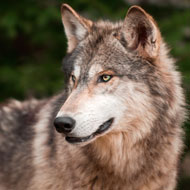
Wild animals such as wolves, pigs and cats may have become domesticated more quickly due to changes in mating behaviour, according to new research by the University of Liverpool.

Scientists say that as the animals’ population density increased in human environments, males encountered more opportunities for mating.

The benefits of pursuing these are likely to have outweighed the cost of defending access to a single mate.
 
Dr Ardern Hulme-Beaman explained: “If early domestic animals lived at higher density than their wild counterparts, the likelihood of early domestic females breeding with multiple partners increased.

“It follows that if early domestic females mated with multiple males, both wild and domestic, the more abundant and higher quality sperm of the early domestic male would out-compete the sperm of wild males.

“This could explain the reduction in transfer of genes between wild and increasingly domesticated populations.”

There are a number of advantages to polyandrous mating - for the males, it improves sperm production and quality, while for female animals, there is a benefit to their fitness and a reduction in unwanted advances.

Researchers say this prompts a rapid change in reproductive traits and competitive fertility and could explain why domesticated animals show “dramatically different social behaviours” to their wild ancestors.

Whilst the research team accepts that the main driving force behind the domestication of wild animals is habitat preference and human selection, further research could improve understanding of how changes in mating behaviour contributed to this process.  

 

Become a member or log in to add this story to your CPD history

Vets launch new podcast for pet owners

News Story 1
 Two independent vets have launched a podcast to help owners strengthen their bond with pets. Dr Maggie Roberts and Dr Vanessa Howie, who have worked in both veterinary practice and major charities, are keen to use their experience to enable people to give pets a better life.

The venture, called Vets Talking Pets, provides advice and information on a range of topics, including how to select a suitable pet, where to obtain them and how to get the best out of your vet. Maggie and Vanessa will also discuss sensitive subjects, including end-of-life care, raw food diets and the cost of veterinary care.

The podcast can be found on all the usual podcast sites, including Podbean, Apple, Amazon Music and YouTube. 

Click here for more...
News Shorts
BEVA CPD course explores sino-nasal disease

The British Equine Veterinary Association (BEVA) will host a new CPD course exploring the diagnosis of sino-nasal disease.

Led by Safia Barakzai, Henry Tremaine, Justine Kay-Smyth and Neil Townsend, the course aims to support experienced equine vets dealing with nasal discharge cases.

The course will be presented through a series of practical sessions, accompanied by case-based learning. Attendees will be guided to improve their oral examination technique and radiographic approach, as well as learning how to make good use of endoscopy and oroscopy.

BEVA says that learners can combined these skills to perform a 'logical, efficient investigation', with better clinical decision-making and fewer unnecessary steps.

The course will take place on Tuesday, 21 July at the University of Surrey. For more information or to book, visit the BEVA website.

