


New research suggests understanding could be enhanced by drawing on human research
Scientists at Oxford University are calling for a review of how behaviours spread through wild animal populations and how this could aid in the understanding of human social connections.
Their study, published in Trends in Ecology & Evolution, suggests that understanding of animal behaviours could be improved by drawing on the latest discoveries in human social systems.
The human studies found that the most influential people are not necessarily the most social. Instead, the most influential people are often those found in close-knit social circles.
The human studies revealed that while people in close-knit groups had fewer social connections, they were very influential and promoted the spread of new behaviour.
In the new study, researchers show how these recent insights can be used to enrich our understanding of animal social networks.
Examples presented in the paper reveal how, even in the most basic social systems, small changes can have a major influence on which animals might adopt a behaviour and which might be key to its spread.
“Just like in humans, various animal species are known to be capable of social considerations, such as when to adopt a behaviour, or who to learn from,” explained lead author Dr Josh Firth. “These choices mean that behaviours don’t spread like diseases.”
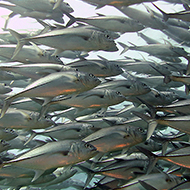
The researchers also draw on recent studies of animals' social connections and how this could inform understanding of human social lives. For example, birds may ‘follow the majority’ when learning to find food and fish appear to make fine-scale judgements about when to copy their shoal-mates’ behaviour.
Scientists suggest that by considering how these choices affect the spread of behaviour, animal systems could reveal new insights into the spread of different behaviours (such as mating or foraging), and which factors govern which individuals have the most influence on their peers.
"Studying wild animal populations holds exceptional advantages, such as the ability to experimentally manipulate natural social networks, and to track individuals over long time periods and many generations,” Dr Firth added.


 Defra has published guidance for the vet sector ahead of a proposed UK-EU Sanitary and Phytosanitary agreement.



